Parenting is often described as the hardest job you’ll ever love.
It’s a journey filled with incredible highs, steep learning curves, and moments that stretch your heart in ways you never thought possible.
Now, layer onto that the unique path of raising a child with special needs.
The journey of a special needs child comes with all the normal demands PLUS an extra dimension of demands:
- Constant advocacy for your child in obtaining proper evaluations, appropriate school settings, sufficient support, and more.
- Navigating complex systems of care and medical insurance billing
- Attending numerous appointments and therapies
- Managing financial pressures from all the extra medical bills a special needs child accrues that, more often than not, insurance does NOT cover
- Carrying a significant amount of emotional weight because no one wants to see their child struggle AND the parents end up feeling helpless to prevent it and guilty for not being able to do more or to fix it.
- The overall strain on the marriage because the child’s needs become SO consuming, it feels like there is no time to be a couple doing “couples’ things”. All your time and energy is consumed by the special needs child
It’s a path that requires immense strength, resilience, unwavering dedication, and just plain stubbornness and perseverance.
Amidst this challenging reality, there’s a topic that often gets pushed to the back burner and shrouded in guilt: taking care of yourself.
As a parent of a special needs child, you might feel like every ounce of your energy, time, and resources must go to your child.
The idea of prioritizing your own needs can feel selfish, even wrong.
But here’s the truth…
AND it’s a crucial one: self-care for parents of special needs children isn’t a luxury; it’s a fundamental necessity.
Why?
Self-care is NOT about neglecting your child.
Self-care IS about sustaining yourself and avoiding burnout so you can continue to be the loving, capable caregiver your child needs, not just today, but for the long haul.
Let’s face it: self-care enables you to be your best self because if you are unable to take care of your child due to fatigue and burnout… who will do it?
The Unique Challenges You Face: Why Self-Care is Non-Negotiable
Let’s be honest: the demands placed upon parents of special needs children are significant and relentless.
You’re not just a parent, but you’re also a:
- Case manager
- Medical expert
- Educational champion
- Insurance and benefits specialist
- Legal advocate
- Therapist’s assistant
- Logistical/Project manager
- In-Home Care Coordinator
- Financial planner (I know that one! 😊 lol)
- And much more!
This constant state of being “always on” takes a HUGE toll on your mental, physical, and emotional well-being.
The unique loads placed on parents of special needs parents include:
- Navigating Complex Education / Medical Systems: From Individualized Education Programs (IEPs) and 504 plans to insurance battles and medical specialists, the administrative burden alone can be consuming, overwhelming, confusing, and frustrating.
- Higher Levels of Stress and Uncertainty: The unpredictable nature of some conditions, the worry about the future, and the constant need to problem-solve create chronic stress that typical parents might not experience or encounter.
- Financial Strain: The cost of out-of-pocket therapies, equipment, medical expenses, and sometimes reduced work hours (or even 1 parent not working at all) can create significant financial pressure.
- Impact on Relationships: The demands of caregiving severely strain partnerships, relationships with other children, and even friendships, sometimes leading to isolation.
- FUN FACT: According to this article from the National Library of Medicine, the divorce rate among parent of special needs children is significantly higher than the national average!
- Feeling Misunderstood: Well-meaning friends or family may not fully grasp the depth of the challenges you face, leading to feeling they “do not get it”, as well as feelings of severe loneliness & isolation.
- Mental, Physical, & Emotional Exhaustion: The sheer demands on your energy combined with sleep deprivation & overall emotional weight of your child’s challenges can lead to profound, lasting fatigue.
When these pressures build without release, they can lead to what’s often called special needs parent burnout.

This isn’t just feeling tired; it’s a state of chronic physical, emotional, and mental exhaustion that can manifest itself as irritability, detachment, feeling overwhelmed, loss of patience, and even physical symptoms like headaches, digestive issues, weight gain/loss, etc.
Think of it using the “empty cup” analogy.
If your cup is constantly being emptied by the demands of caregiving, advocacy, and stress, and you never take time to refill it, eventually, there is nothing left to give.
It’s like running on empty and the only thing keeping you going are the vapors and fumes leftover… constantly.
You never feel like you get enough sleep.
You never feel recharged.
You could lose weight from all the stress.
Tons of coffee and sugar are the only things that are barely keeping you awake during the day.
The smallest, tiniest things agitate you faster than you can say, “Go Away!”.
Any of this sound familiar?
It does to me because I lived it!
The first three years of my daughters’ lives was a constant state of this.
Long days of work followed by long nights caring for the girls.
Filling their 11×17 cookie sheet trays (x 2!… benefits of twins! Lol) with syringes just to manage their chronic medical issues.
Endless doctor’s appointments, countless therapy appointments, and long hours on the phone with medical billing to get their care covered or correct billing errors.
Working 2 jobs to try to keep our financial head above water since my wife was forced to be a stay-at-home mom AND we need 2 full time caregivers to help her while I’m at work!
Let’s just say I get what special needs parent burnout and caregiver stress is like and how it can wreak absolute havoc on your life!
After we got over the hump, here is the thing I realized: your well-being isn’t separate from your child’s well-being … it’s intrinsically linked.
Your ability to provide consistent, loving, and effective care depends on your own physical, mental, and emotional health.
This is why caregiver stress is a serious issue, and proactive self-care is a vital part of any strategy for supporting the needs of special needs parents.
Why Taking Care of You Benefits Everyone
It might feel counterintuitive, but investing time and energy in yourself is one of the most impactful things you can do for your child and your family.
Prioritizing your well-being has a ripple effect that extends far beyond just you.
When you feel better, you are better equipped to handle the demands of your day.
Let’s look at the benefits:
- For You: Self-care helps replenish your physical and emotional reserves, significantly improves your mental & physical health, reduces feelings of anxiety & overwhelm, and builds up your resilience and self-regulation for navigating everyday challenges.
- For Your Child: A parent who is less stressed, more patient, and emotionally regulated is more present and responsive to their child’s needs. Your child benefits from your increased capacity for calm by feeling more stable and receiving more consistent care. Ultimately, your self-care contributes directly to your child’s stability and well-being.
- For Your Family: When you are less stressed, the overall family dynamic improves. You have more energy for your partner and other children, foster stronger relationships, and create a healthier, more balanced home environment. Your self-care also sets a positive example for your children about the importance of health and personal well-being.
- For the Long Haul: Parenting a child with special needs is a lifelong commitment. Burnout can lead to serious health issues, both mental and physical, which can compromise your ability to care for your child over the long haul. Self-care is an essential strategy for long-term sustainability by ensuring you have the capacity to be there for your child for years to come.
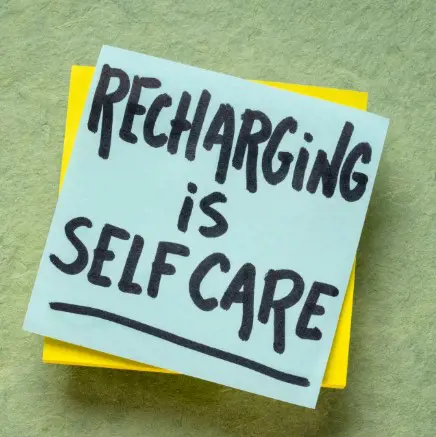
Key Point: Self-care is NOT a selfish act!

Rather it is an act of love and preservation that enables you to be at your best for your family.
Self-care is also a strategic investment in your family’s future and a testament to your personal strength and commitment to your family.
Lastly, it’s also about ensuring the primary caregiver – you – is functioning at your best possible level.
For too many years, I ran on empty thinking that by being there for everyone all the time, I was helping them.
In fact, it was the opposite…. the family was in shambles.
My wife and I were constantly arguing and bickering.
The kids felt the pressures too and acted out as well.
It was creating a never-ending cycle of chaos, anger, resentment, and almost leading to divorce.
How did we overcome this?
Reframing the guilt was key.
I felt guilty for wanting to get a break, but the fact was I needed a break.
Add to that, how my wife takes a break and I take a break are different.
I’m an outgoing extrovert and get energy from being around people.
My wife is an introvert. When she needs to recharge her batteries, she needs quiet, calm, and a good book.
How did we satisfy both of our needs?
I took the kids to visit friends and relatives!
I loaded the kids up, packed their medicines, and headed out to visit people.
She chilled in the backyard and read a good book.
What I realized was that our house felt like a prison, filled with isolation, stress, and despair.
I needed to change the environment for the entire family’s sake…. and BOY did it help!
It was long before doing these “mini trips” helped to re-align what it felt like being back in our house.
It went from work and drudgery to excitement and joy!
Before long, the kids felt the dynamic change for the better and their behavior reflected that.
It doesn’t take much, but sometimes a little change goes a long way! 😊
How To Initiate Self-Care: Actionable Ideas You Can Integrate Weekly
Okay, so we know why it’s important.
Now for the how.
This is where the rubber meets the road.
It’s easy to say, “take care of yourself,” but how do you actually do that when your schedule is packed with appointments, therapies, and the daily routines of caregiving?
The key is to start small, be consistent, and integrate these actions into your week to turn them into a habit, not just hope and wish they happen… in other words, you need to initiate consistent action.
These actions don’t have to be elaborate spa days or exotic vacations (though those are nice if possible!).
Often, the most impactful practical self-care tips are small, manageable actions you can commit to in order to create a weekly (or even daily) self-care routine.
Even 15-30 minutes dedicated to yourself can make a world of difference.
Let’s break down some ideas by category:
Physical Self-Care
This is about taking care of your body’s needs and will directly combat the physical exhaustion that can come with caregiving.
- Move Your Body: Schedule 30 minutes for a walk around the block, some gentle stretching, yoga, or light exercise a few times a week. Even a quick dance party in the living room counts! Physical activity releases endorphins and helps manage stress.
- Prioritize Sleep (Even Small Improvements): Consistent, adequate sleep is crucial. While full nights might be a dream sometimes, look for small ways to improve. Could you aim to go to bed 30 minutes earlier just one or two nights this week? Can you establish a relaxing bedtime routine?
- Having trouble calming your mind? Try a noise generator app like SimplyNoise app to create different color noises (white, brown, pink, etc.) that play in the background and help you fall asleep.
- Nourish Yourself: Plan one healthy meal to cook for yourself this week or simply commit to ensuring you eat three balanced meals a day. Stay hydrated by keeping a water bottle with you and sipping throughout the day. Fueling your body properly gives you the energy you need.
Mental & Emotional Self-Care
This is about giving both your mind & emotions a break and giving you space to process.
- Engage Your Mind (Pleasurably): Dedicate 15-20 minutes a few times a week to reading a book for fun, listening to a podcast you enjoy, or simply putting on music that makes you feel good. I like to listen to books on Audible on my car ride to / from work. Check it out!
- Practice Mindfulness or Meditation: Even 5-10 minutes of quiet, focused breathing or a short, guided meditation can calm your nervous system and help you feel more grounded. Apps like Calm or Headspace, or free options on YouTube, can guide you.
- Journal: Spend 5-10 minutes writing down your thoughts, feelings, or just a list of things you’re grateful for. This can be incredibly cathartic and help you gain perspective.
- Rediscover a Hobby: Even a short burst of time spent on something you love – gardening, painting, playing an instrument, crafting – can reconnect you with parts of yourself outside of caregiving.
Social Self-Care
An often-overlooked aspect of self-care is social care (aka connecting with others).
Connecting with others helps combat isolation and provides vital support (especially for us extroverts! 😊).
Do NOT wait until you are in crisis mode to reach out to others.
Social connection is all about preventative care!
- Reach Out to Your Support System: Schedule a phone call, send a meaningful text exchange, or plan a virtual coffee chat with a supportive friend or family member.
- Connect with Other Parents: Finding a support group for parents of special needs children, either online or locally, can be incredibly validating. Sharing experiences, challenges, and triumphs with people who truly “get it” is invaluable.
- Prioritize Partner Time: If you have a partner, make an effort to schedule dedicated quality time together, even if it’s just watching a show after the kids are asleep or having a meal without distractions. Nurturing your relationship is crucial.
Practical & Logistical Self-Care
Sometimes, self-care is simply about managing the practical load to create breathing room.
- Plan for Respite Care: This is huge. Explore options for respite care, whether it’s family stepping in, trading childcare with another parent, hiring a trained caregiver for a few hours, or utilizing programs provided by local care coordination agencies. Even a few hours away can allow you to recharge, run errands alone, or simply have quiet time.
- Schedule “Me Time” (Alone Time): Put 15-30 minutes of quiet time alone in your house on your calendar. This might mean your partner takes the kids out or the kids have screen time in another room but dedicate that time to doing nothing OR whatever you want!
- Practice Saying “No”: It’s okay (and necessary) to decline requests or commitments that will add undue stress or take away from your limited energy and time. Protecting your boundaries and setting limits is KEY for regaining your energy back and managing what is already on your plate.
- Delegate or Simplify: Look for tasks you can delegate to a partner, older children, or even outsource if feasible. Can any routines be simplified? Can you meal plan to reduce dinner stress? Can your partner rotate household chores with you?
Practical Tips for Implementing Your Weekly Self-Care:
- Start Small: Don’t try to do everything at once. Pick just one thing from the list to start this week.
- Schedule It: Put it on your calendar like any other important appointment. Blocking out the time makes it more likely to happen.
- Be Flexible: Life with special needs is unpredictable. If your planned self-care time gets interrupted, don’t beat yourself up. Just look for another pocket of time later, even if it’s shorter.
- Celebrate Small Wins: Acknowledge yourself for taking even small steps. Every moment you dedicate to your well-being is a victory.
Addressing the “But How?”
You might be reading this and thinking, “This all sounds great, but how? I barely have time to shower!”

This is a valid feeling, and you are not alone in facing these barriers.
Lack of time, overwhelming guilt, and insufficient resources or support for special needs parents are very real obstacles.
Remember, self-care is NOT about finding hours each day; it’s about finding moments.
It’s about shifting your mindset to believe you are worthy of care.
It’s okay to start with just 5 or 10 minutes.
It’s realizing it’s okay to ask for help – from family, friends, or professionals.
Seeking therapy or counseling for yourself is also a powerful form of self-care and can provide strategies for managing stress and building resilience.
Don’t strive for perfection; strive for progress… one small step at a time.
Conclusion
Parenting a child with special needs is a journey unlike any other.
It requires immense strength, patience, and love.
While your child’s needs are significant, your own well-being is equally vital.


Self-care for parents of special needs children isn’t a luxury you can’t afford.
Rather, it’s the foundation that allows you to continue being the strong, loving, and present caregiver your family needs.
You work incredibly hard, navigate complex challenges daily, and pour alot of yourself into your child’s life.
You deserve and require care, rest, and moments to simply be you.
Prioritizing your well-being isn’t selfish; it’s an act of strength, resilience, and profound love for your entire family.
By integrating small, consistent self-care practices into your week, you’re not just surviving.
Instead, self-care enables building a sustainable path to thrive, to move beyond burnout and to empower yourself to meet the unique demands of your wonderful journey.
What is one small self-care step you are committing to take this week?
Pick one from the list above and put it on your calendar.
Also, please share with us what you plan to do in the comments section below
Last but definitely not least:
Remember that your well-being matters because YOU MATTER!
You are NOT being selfish because asking for help is NEVER a sign of weakness but instead a sign of strength and awareness.
Don’t believe me? If you don’t think your needs matter, ask your kids… I’m sure they will be happy to tell you otherwise! Lol 😊
Until next time,
Live The Life You Love, Want, And Deserve! 😊
Do you need 1 on 1 coaching and guidance?
Schedule a call with my friend Zeke Zimmerman here!